
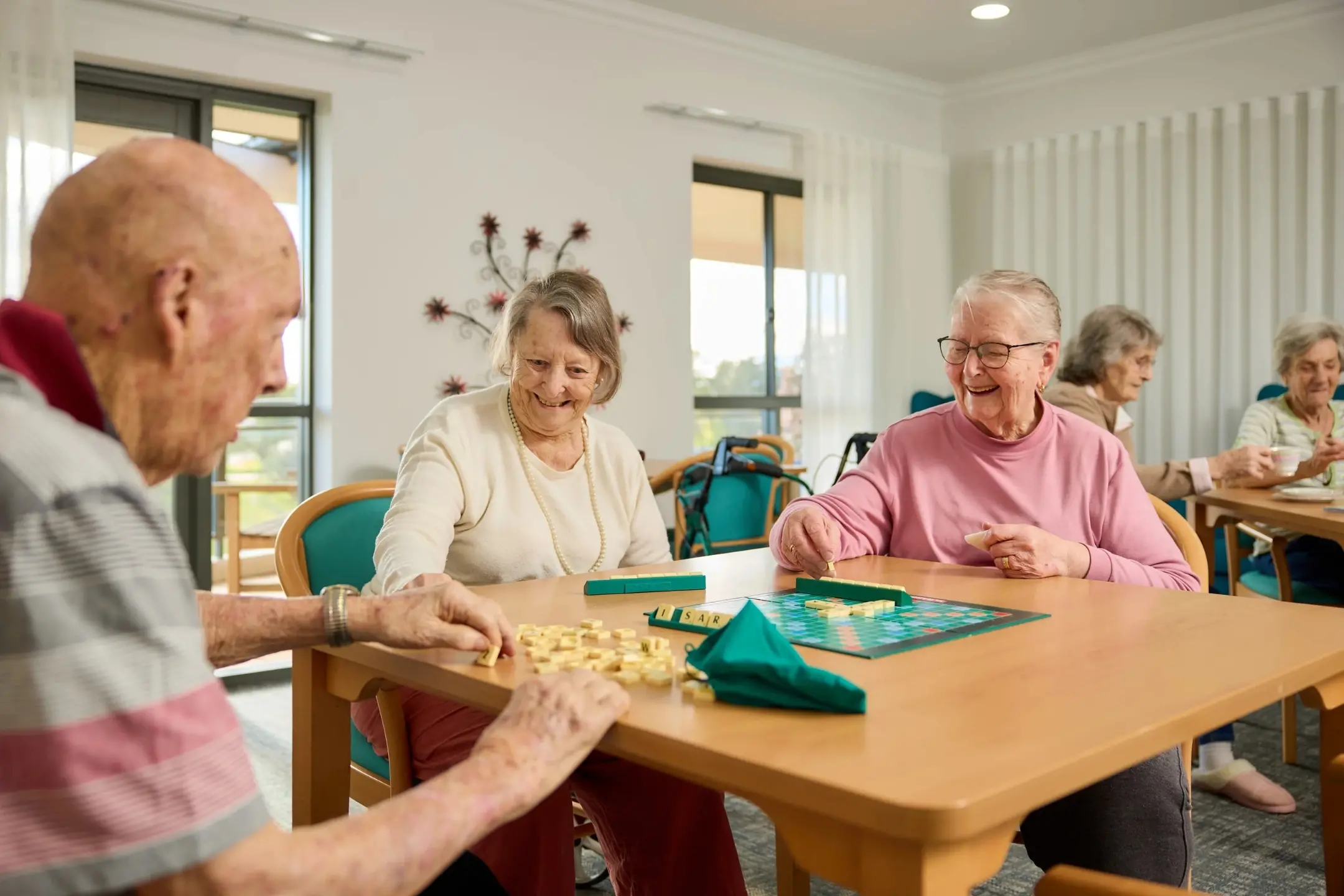
PHOTO
78132.0
A favourite chair can come too.
So can the photographs, treasured belongings and small pieces of a life that make a room feel familiar.
There can still be trips into town, family visits, afternoons spent doing very little, activities when you feel like joining in, and outings into the community you have known for years.
These might sound like small things.
But when an older person and their family first begin thinking about residential aged care, they can be among the things they fear losing most.
Home is rarely just a building.
It is independence, routine, neighbours, a garden, familiar streets.
A favourite cup in the cupboard and knowing where everything is without thinking about it.
So it is hardly surprising that conversations about leaving it are often postponed.
For many families, residential aged care is something to think about later — until later suddenly arrives.
A fall. A hospital admission. Medication becoming difficult to manage. Meals being missed. A partner no longer able to provide the care they once could.
Then a decision that might have been explored gradually can become urgent.
But aged-care providers across the Hilltops are encouraging families to turn that process around.
Their message is simple: you do not have to be ready to move before you are ready to look.
When should you start looking?
Karen Campbell, Service Manager at Mercy Place Mount St Joseph's in Young, said it was better to start exploring the possibilities sooner rather than later.
“We always encourage people to start exploring their options sooner rather than later,” Karen said.
Often, the signs begin with everyday things becoming harder — preparing meals, managing medication, cleaning or keeping up with personal care.
That does not necessarily mean residential care is the next step.
Support at home may allow an older person to remain safely and independently at home for considerably longer.
But Ms Campbell said there was still value in understanding what residential care looked like before it was needed.
“Even if residential aged care is not something they're considering right now, visiting an aged-care home early can help remove some of the uncertainty and give families peace of mind,” she said.
“It means that if care needs change unexpectedly, they already understand what support is available and can make informed decisions without feeling rushed.”
That distinction matters, and looking is not deciding.
Walking through the door of an aged-care home does not mean someone has agreed to live there.
It means they learn what is behind the door.
What are we frightened of?
At Southern Cross Care Young Residential Aged Care, residential manager Lucie Flynn said there was still reluctance and stigma surrounding the move into residential care.
“What we find is that there’s still a general reluctance and stigma attached to moving into aged care,” Lucie said.
But she said perceptions often changed after people visited.
“They see happy residents, caring staff, engaging activities and lovely facilities.”
Mrs Flynn said some people still imagined aged care as “four bare walls and not much variety”.
Instead, she said the Young home worked around the needs and preferences of individual residents.
“It’s not a one-size-fits-all,” she said.
“Residents still have their independence — they choose when they want support, what activities interest them and how they want to live their day.”
There are practical routines, including meal times, but Mrs Flynn said that did not mean every resident lived an identical day.
And for families wondering what residential care is really like, her advice is to talk not only to the people running the home.
“Ask questions of both staff and residents,” she said.
“Take a tour of our facilities and sit in on our activities.
“Young is a small town — you're likely to know someone who has or is living in our aged care home, so ask them about their experiences here.”
What should you look for when you visit?
A beautifully presented bedroom might make a good first impression.
But Rebecca Mesa, Administration Officer at Mercy Place Mount St Joseph's, said families should look much further.
“The room is important, but it's only one part of the picture,” Rebecca said.
“Look at how staff interact with residents and whether those interactions feel genuine, respectful and caring.”
Watch what is happening around you.
Notice whether residents and staff speak comfortably with one another.
Look at the dining area, the outdoor spaces and the activities underway.
Think about whether somebody who prefers company has opportunities to find it — and whether somebody who values quiet and privacy can still have that too.
“Most importantly, consider whether it feels warm, welcoming and somewhere you or your loved one could genuinely feel comfortable and at home,” Ms Mesa said.
My Aged Care similarly encourages families to visit prospective homes rather than relying solely on information online, and to pay attention to the atmosphere, rooms and communal areas, meals, activities and interactions between residents and staff.
Families can also compare providers and Star Ratings through My Aged Care's Find a Provider service.
In other words, don't only inspect the building.
Observe the life happening inside it.
Can you still be yourself?
At Burrowa House in Boorowa, making a new room feel personal can begin with something as simple as bringing a favourite chair.
Photographs can go up, belongings with personal value can be displayed, and memory boxes are positioned near residents' doors.
But Burrowa House Business Manager Phil Coggins said making somewhere feel like home went beyond what was placed in the room.
Residents able to go out were encouraged to continue outings with their families, and the home organised bus trips around the district.
“Promoting the facility as their home is key to a pleasurable and stress-free stay,” Phil said.
That also means life should continue to include enjoyment.
“Being in an aged care facility doesn't mean residents should stop having fun,” Mr Coggins said.
At Burrowa House, children from a local school and daycare centre visit residents and the home holds activities and theme days.
Residents also get out into the community.
That may sound incidental to the clinical care someone receives, but it isn't.
For an older person, the question is not only “Will somebody care for me?”
It is also “Will I still be me?”
Why does staying local matter?
That question can take on particular weight in a regional community.
For somebody who has spent much of their life in or around Boorowa, Harden or Young, moving away for care can mean much more than changing address.
It can mean leaving familiar faces, family connections and the community where their life has happened.
Mr Coggins said that was central to what Burrowa House aimed to provide.
“This is exactly what we are about,” he said.
“Giving local residents the opportunity to still live in Boorowa and spend their twilight years surrounded by family and friends.”
For families, keeping someone locally can also mean being able to visit regularly rather than travelling hundreds of kilometres.
There is another residential-care option in both Boorowa and Harden that some families may not realise exists.
Murrumbidgee Local Health District provides residential aged care through its Multi-Purpose Services.
Boorowa currently has 13 residential aged-care beds, while Murrumburrah-Harden has 24.
MLHD Young Cluster Manager Kerry Lindeman said the Multi-Purpose Service model brought health, aged care and community services together in rural towns.
“The program helps older people stay close to their family, friends and community while receiving the care and support they need,” she said.
Care is delivered by local healthcare teams including nurses, GPs and other health professionals, with support from virtual services and larger regional hospitals when required.
Families interested in residential care through either service are encouraged to begin with an aged-care assessment through My Aged Care.
Once approved for residential care, they can speak directly with the local service about availability, waiting lists, accommodation, fees and admission.
And once again, they do not need to wait for a crisis before walking through the door.
“Families considering residential aged care at either the Boorowa or Murrumburrah-Harden MPS are welcome to arrange a tour of the facility and meet with staff to discuss the person's care needs and determine whether the service is the right fit,” Ms Lindeman said.
She said many families explored several providers before making a choice.
“We encourage people to begin these conversations early as taking the time to understand available options and discuss future care preferences can help ensure a smoother transition should residential aged care be needed in the future.”
##When does an aged-care home become your home?
A bed, wardrobe and ensuite do not automatically create belonging.
Sue Rice, Lifestyle Coordinator at Mercy Place Mount St Joseph's, said feeling at home was different for everybody.
Maintaining choice was important — as was remaining connected to interests, relationships and the things that had shaped a person's life before they arrived.
That could include cultural identity, faith and spirituality, hobbies, family relationships and individual routines.
Regular visits from family and friends could remain an important part of life.
So could community involvement and social, cultural and spiritual activities.
“Over time, it's those relationships, routines, personal choices and connections that transform a place from simply being an aged-care facility into a true home,” Mrs Rice said.
That transition may still take time.
Moving from a house where somebody may have lived for 30, 40 or 50 years can involve grief.
There may be possessions that cannot come. A garden somebody can no longer tend. A pet. A neighbour who has always popped in. The kitchen table where generations have gathered.
Residential care should not be romanticised as though none of that matters.
But nor should it automatically be imagined as the end of independence, relationships or meaningful life.
Mrs Flynn said some Southern Cross Care residents arrived nervous, shy or reluctant.
“Fear, uncertainty or stigma about aged care often fades quickly once someone has settled in,” she said.
“Some residents or families wish they’d known sooner how positive an experience aged care is, instead of putting off the decision.”
##What happens if care needs increase?
Another question families should ask when comparing homes is what happens next.
What if mobility declines?
What if dementia progresses?
What if somebody who initially needs relatively little assistance later needs significantly more clinical support?
Mincy Mathew, Clinical Manager at Mercy Place Mount St Joseph's, said “ageing in place” meant care could change as the resident's needs changed.
“We work alongside each resident throughout their journey, getting to know them and understanding what's important to them,” she said.
“If their health needs become more complex, our care and support can adapt accordingly, helping them receive the assistance they need without the disruption of moving to another home.”
Those conversations are worth having before choosing a facility.
So are the more difficult ones.
Mr Coggins encouraged families to discuss clinical needs early and to think ahead about future and end-of-life care.
Knowing someone's wishes before health deteriorates can reduce the number of major decisions families are forced to make under pressure.
What about the cost?
For many families, this is the part that stops them in their tracks.
Residential aged care can appear financially complicated because there is no single price applying to everybody.
Mr Coggins said money was a major concern for many families and encouraged people to seek financial advice early.
For people entering permanent residential aged care now, costs can include a basic daily fee, means-assessed contributions, accommodation costs and optional higher everyday living fees.
The exact arrangements depend on the person's circumstances, means assessment and the home and room they choose.
Some people remain covered by earlier fee arrangements depending on their circumstances.
My Aged Care provides a residential aged-care fee estimator, while Services Australia completes the formal means assessment that helps determine what someone may be asked to contribute and whether government assistance with accommodation costs applies.
My Aged Care also recommends considering independent financial advice before deciding how accommodation costs will be paid.
The important thing is not to assume that residential care will be unaffordable, or that the family home must immediately be sold.
And do not wait until somebody needs a bed tomorrow to begin understanding the financial side.
Find out what applies to the person involved.
So where do you begin?
For someone who has never used government-funded aged care before, applying for an aged-care assessment through My Aged Care is the practical starting point.
Applications can be made online or by calling 1800 200 422, and an older person can have a family member, friend or carer help them through the application with their permission.
An assessment determines what government-funded care the person may be eligible to receive, including residential aged care where appropriate.
But families do not need to wait for every piece of paperwork to be completed before beginning conversations.
Ring the homes.
Ask whether you can visit.
Take Mum or Dad if they want to come.
Bring a sibling, friend or another person whose judgement you trust.
Visit more than one.
Ask what happens on an ordinary weekday, not just during a scheduled tour.
Ask whether residents can bring their own furniture.
Ask how often family can visit.
Ask about food, activities, outings, privacy and clinical care.
Ask what happens when somebody's level of care needs change.
And ask residents themselves what it is like to live there.
Then go home.
Think about it.
There may be no decision to make yet, but now you know.
And that is precisely the point.