
PHOTO
For many men, prostate cancer is something they know little about until it suddenly becomes personal.
That is something Wagga Wagga Prostate Cancer Support Group facilitator Mike Murray has seen repeatedly, and during Prostate Cancer Awareness Month this September he is encouraging men across the region to start the conversation earlier.
“Many people have no idea about prostate cancer,” Mr Murray said.
“Many blokes don’t know what a prostate is, what it does or where it can be found in the body.
“Very rarely do we see blokes coming up to us with enquiries unless they have recently been diagnosed."
The prostate is a small gland located below the bladder and forms part of the male reproductive system.
Interestingly, he said younger women were often among those approaching the group with questions.
“This is encouraging as they are thinking of their father or grandfathers’ health,” he said.
For Mr Murray, the importance of awareness and early detection is personal.
“My own prostate cancer was diagnosed just in time at age 60,” he said.
Two of his younger brothers are now on “watch and wait” following PSA blood testing.
Mr Murray added that men living in regional areas face a 24 per cent higher risk of death from prostate cancer compared with their urban counterparts.
“Of course in the ‘bush’ there are areas well away from specialist nurses, urologists, screening services, etc,” he said.
“Travel is expensive and treatment could be costly.”
#Early detection can make a difference
Prostate cancer is the most commonly diagnosed cancer in Australia, with around 79 men diagnosed each day and about one in five men diagnosed during their lifetime.
Five-year survival has improved dramatically over recent decades, from around 58 per cent in the 1980s to about 96 per cent today, and approaches 100 per cent when prostate cancer is detected early at Stage 1.
That makes understanding individual risk and knowing when to speak to a GP particularly important.
New national guidelines for the early detection of prostate cancer have recently been introduced, with recommendations differing according to a man’s age and risk factors.
For men at higher risk, the guidelines recommend considering PSA testing every two years from age 45.
Higher-risk factors can include having a brother with prostate cancer, a father diagnosed before the age of 65, or having two or more second-degree relatives die from prostate cancer.
For men aged 45 to 49 who are not considered at higher risk, routine testing is not recommended, although an initial PSA test may be offered following discussion with a GP.
For men aged 50 to 69 who choose testing after an informed discussion with their doctor, the standard pathway recommends a PSA blood test every two years.
For men aged 70 and over, decisions about testing take greater account of overall health, personal preferences and life expectancy.
A PSA test measures the level of prostate specific antigen in the blood.
An elevated result does not automatically mean prostate cancer is present.
If PSA remains high, repeat testing may be followed by referral to a specialist and further investigation, which can include an MRI before any biopsy.
Murrumbidgee Local Health District is also supported by a Prostate Cancer Specialist Nurse, providing specialist information and support for men and families navigating prostate cancer.
Support is also available through Prostate Cancer Foundation of Australia (PCFA), including counselling, peer support, information services and prostate cancer support groups.
#Getting blokes talking
For the Wagga Wagga Prostate Cancer Support Group, raising awareness is not simply about handing out information, it's also about finding ways to get men talking.
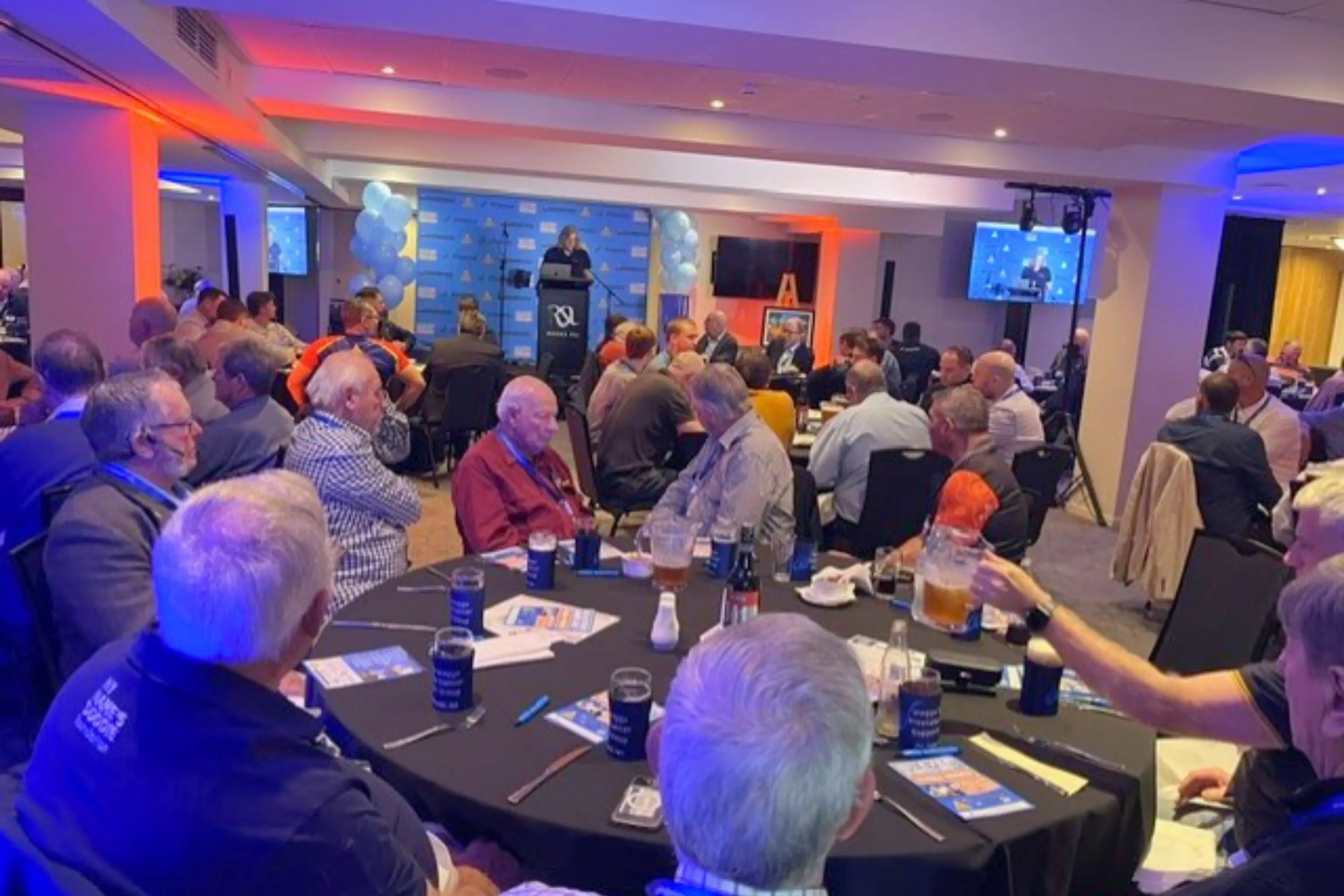
The group held its 11th Biggest Ever Blokes Lunch in early September.
Rather than staging a traditional health seminar, the afternoon combined food, drinks, entertainment, raffles, an auction and guest speakers while still setting aside time for an important prostate cancer message.
“The Biggest Ever Blokes Lunch basically gives us a captive audience of 300 blokes,” Mr Murray said ahead of the event.
“They know that they are going to enjoy an afternoon of fun, food, drink, heads and tails, raffle, auction, comedian as MC and a special guest speaker.”
A short PCFA awareness video formed part of the program, along with information about the specialist support available in the region.
The approach is deliberately informal — taking an important health message to men in an environment where they are already comfortable gathering and talking.
The Wagga Wagga support group is one of a network of prostate cancer support groups helping men and their families share information, experiences and practical support following a diagnosis.
Prostate Cancer Awareness Month has also provided an opportunity for those groups to take the message beyond people already affected by the disease.
Mr Murray said PCFA had encouraged support groups to approach their local councils about lighting public spaces blue during September.
In Wagga Wagga, trees on Fitzmaurice Street were illuminated in blue as part of the awareness campaign.
But behind the blue lights, events and statistics is a much simpler message.
Men need to know their family history, understand whether they may be at greater risk and be willing to have a conversation with their doctor before prostate cancer becomes something they are forced to think about.
For information and support, contact the PCFA on 1800 22 00 99 or visit pcfa.org.au.