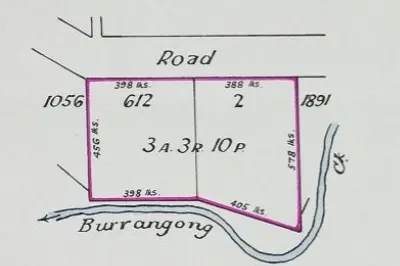
By KAREN SCHAMBERGER - Young Historical Society Chinese Australian market gardeners once grew a variety of vegetables on land leased from Carlo Marina on Burrowa Street, which is now the site of Bunnings, but not all leases were officially recorded. After Carlo’s death in 1909, the land was transferred to his daughter-in-law, Helen. On 6 April 1912 she leased it to Alfred Ernest Young, a son of Thomas Louis Ah Geang/ Ah Young and his wife Isabella Maude. Alfred was born at Young in 1884 and carried on his father’s occupation of market gardener. From 13 June 1916, Helen Marina leased the land to Sam Hop. Sam Hop was the name of a business partnership with two possible meanings, three united ie. in cooperation, or it referred to Sam Yap, the three counties in Guandong Province, thereby including any number of partners originating from that area. Sam Hop donated to the Burrangong District Hospital in 1918. At the 1922 Young Pastoral and Agricultural Show they won prizes for their collection of pot herbs, potatoes, three table pumpkins, marrows, swede turnips, onions, cabbages, celery, eschalots, lettuce, radish, carrots and parsnips. Tragedy struck in 1929, however, when a bag of lime spontaneously combusted, devastating Mrs Marina’s shed and destroying Sam Hop’s store of pumpkins and other vegetables as well as a new dealer’s cart valued together at £200. The last record of Sam Hop’s produce is in 1936 when they had potatoes stolen. Brother L.B. McInerney wrote a short reminiscence which is in the files of the Young Historical Museum titled ‘The Chinese Market Garden, Young, 1924’ which described the gardens in the time of Sam Hop. "They had a fairly long rectangular excavation in a centre position into which water must have been pumped up out of the Burrangong Creek and a serviceable level of water maintained," Brother McInerney noted. "Each man had a smoothly shaped but strong piece of wood placed across his shoulders at the back of his neck. "At both ends a large watering can that would have held about 10 gallons of water was suspended. "Each can was fitted with a long spout with a fine spray nozzle at the end. "The men would walk down into the excavation from one end and allow both cans to fill with water while they themselves would be well over their knees in the supply of water in the excavation. "When both cans were full they would struggle out of the hole at the other end and slowly spray at least four rows of delightfully healthy vegetables. "When the cans were empty they would hurry back and refill the cans and return to the lines of vegetables." Thanks to Paul Macgregor who suggested the possible meanings of ‘Sam Hop’.