
PHOTO
63104.0
Concerns about the fuel prices have been raised around the region with the National Farmers’ Federation saying reports from its members across Australia show farmers and fishers in regional communities are increasingly struggling to secure fuel, putting food security and animal welfare at risk.
NFF President Hamish McIntyre said that increases in demand had put pressure on fuel retailers in regional areas.
“While overall national liquid fuel supplies may remain sound, impacts are being acutely felt in regional communities right now, especially among independent retailers, who rely on the ‘spot market’ for supplies,” Mr McIntyre said.
“This is seeing concentrated impacts on regional communities where independent retailers dominate, which is very different from metropolitan areas.
“Given the uncertainty of imports and the increases in domestic demand across the country, the NFF recognises that major fuel importers are prioritising supply to existing contract holders, rather than releasing fuel into the ‘spot markets’.
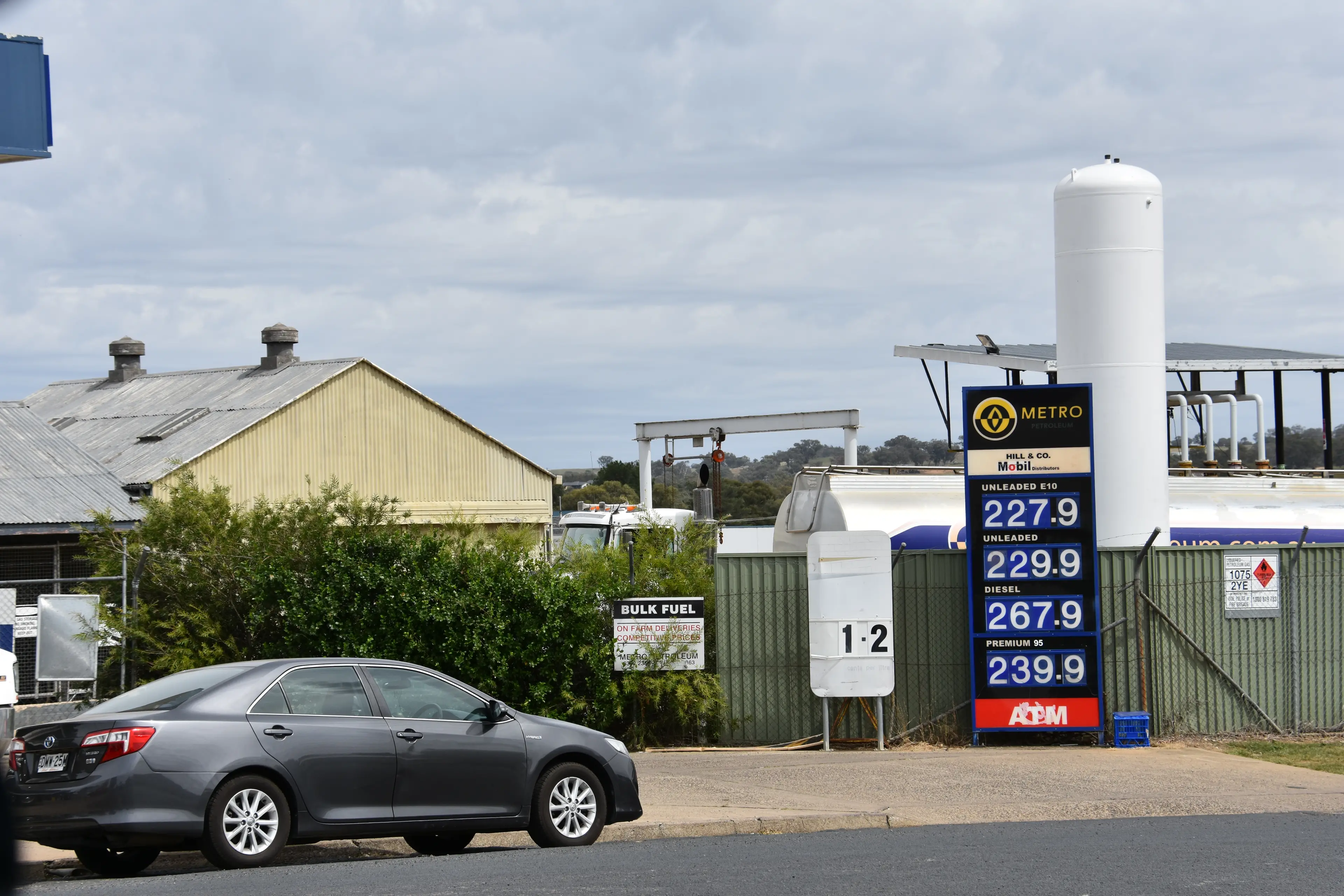
In the Hilltops area, prices have already gone up from what was reported last week, according to Fuel Check on Tuesday motorists were paying 229.9 a litre for Unleaded 91 at Shell Young Metro and Metro Fuel Young.
Prices were a little higher for unleaded 91 at BP Young Roadhouse which was charging 231.9 a litre and South West Fuel which was charging 244.9 a litre.
The cheapest unleaded 91 in Harden according to Fuel check was at Aus Petroleum which was charging 225.9 a litre. Motorists could get unleaded 91 for 229.9 a litre at Ultra Harden and 244.9 a litre at Caltex.
Over in Boorowa, motorists were paying 2.49.9 a litre at both Mobil and South West Fuels.
On the diesel front, Fuel Check has shown Young motorists are paying between 269.9 per litre and 285.9 a litre as of Tuesday, while residents in Boorowa are paying 289.9 while residents in Harden are paying between 274.9 and 279.9 cents a litre.
For Loaders Coaches, one of the local school bus service for students across Grenfell and Young, rising fuel prices are beginning to bite.
Mark Loader, owner of Loaders Coaches, said the recent jump in diesel prices is creating pressure for the business.
The company runs around 11 school bus routes between Grenfell and Young transporting students each day, along with a small amount of charter and tour work.
Mark said the rapid increase in fuel costs, rising by more than $1 a litre at some Grenfell service stations, is making things difficult.
"It is having an affect," Mark said.
While school bus services operate under government contracts that are adjusted monthly to account for fuel price changes, the business still has to cover the costs upfront.
"We still have to pay the money before we get the adjustment. So it is a bit of a tight time at the moment."
The biggest impact could be felt on the business' charter and tour work where quotes are often locked-in months ahead.
"If we've already given a quote, we can't change it just because fuel has gone up," Mark said.
"So we've just got to live with it and sometimes that means running those trips at a loss."
Mark estimated that the business uses around 1500 litres of fuel per week across its operations.
In recent years the company has scaled back its longer tour work due to staffing challenges, focusing more on local charters such as school excursions, sporting trips and occasional work replacing train services for NSW TrainLink.
Another concern on the horizon for the business is the possibility of fuel shortages.
"We don't know what's going to happen in the next two or three weeks," Mark said.
"There's talk about fuel shortages [across the country], so we'll just have to wait and see."
So far the company has not had trouble sourcing fuel, buying locally from service stations in both Grenfell and Young.
The Minister for Energy Chris Bowen recently announced in Parliament that an extra 100 million litres of fuel will be kept in Australia. He has temporarily relaxed fuel quality rules to allow this to happen and told Parliament that Ampol Australia has committed to prioritise this redirected supply for regions of shortage and the wholesale spot market that supports independent distributors.
The NFF welcomed this announcement as a first step, and said the Government needed to consider what further actions it can take to address what is a real and escalating situation in regional areas, and clearly communicate the trigger points for further action.
“At this point, the Government must be prepared to pull other available levers both now and if the situation continues to deteriorate,” Mr McIntyre said.
“Firstly, we strongly encourage the Government to continue to work closely with the major fuel companies.
“Failing that, the Government should consider appropriate regulatory options. These may include geographic or sector-specific measures to ensure fuel reaches critical industries. Should the situation continue to worsen, food supply should be considered a priority under the Liquid Fuel Emergency Act 1984.”
Mr McIntyre said the situation was rapidly escalating from a fuel logistics problem into a serious risk for Australia’s food production system.
“Farmers and fishers are telling us fuel is becoming harder to access and the prices are simply becoming unrealistic, and they need to see a clear plan from Government as to how they will respond both now and into the future,” Mr McIntyre said.
“The majority of fuel in regional communities is supplied by independent retailers. If those operators can’t access supply, farmers can’t access fuel.
“And if farmers can’t access diesel, they can’t harvest crops, plant crops, or move food and fibre to market. We also have industries like dairy that need fuel to move product every single day.”
Mr McIntyre said the situation also had serious animal welfare implications, such as poultry growers needing fuel to maintain the health of their birds and livestock producers needing to transport fodder to feed animals.
The NFF also urged the Australian Competition and Consumer Commission (ACCC) to act swiftly if anti-competitive behaviour is identified within the fuel market.
“It’s encouraging to see the ACCC already increasing its scrutiny of fuel markets. If anti-competitive conduct is occurring, enforcement actions must occur quickly.
“We know every single Australian is feeling the pinch at the pump, but if these price hikes continue, it could mean the difference between a farmer planting a crop or leaving the paddock bare.”
The NFF noted overnight developments internationally aimed at stabilising supply, with the International Energy Agency announcing the release of 400 million barrels of oil from emergency reserves to help ease global disruptions. The NFF awaits Minister Bowen’s response to this request.
Mr McIntyre said while global markets were responding, it remained critical that domestic supply chains continued to function effectively.
“Australian agriculture depends on reliable fuel access every day,” he said.
“Right now farmers are heading into planting and harvest windows where diesel use spikes. Ensuring fuel reaches farm businesses is essential to keeping food moving from paddocks to plates and ports.”