
PHOTO
States and territories can choose to run their own warnings when the "superior" AusAlert system goes live in October, the federal emergency management minister has confirmed.
A test of the new national mobile system will go ahead on Monday, July 27, at 2pm AEST.
The new system works by broadcasting a 10-second siren to mobile phones in areas affected by an emergency.
State representatives had voiced significant concerns about the rollout in a meeting with the minister Kristy McBain.
Ms McBain said the new system was "superior" because it did not rely on a single telco.
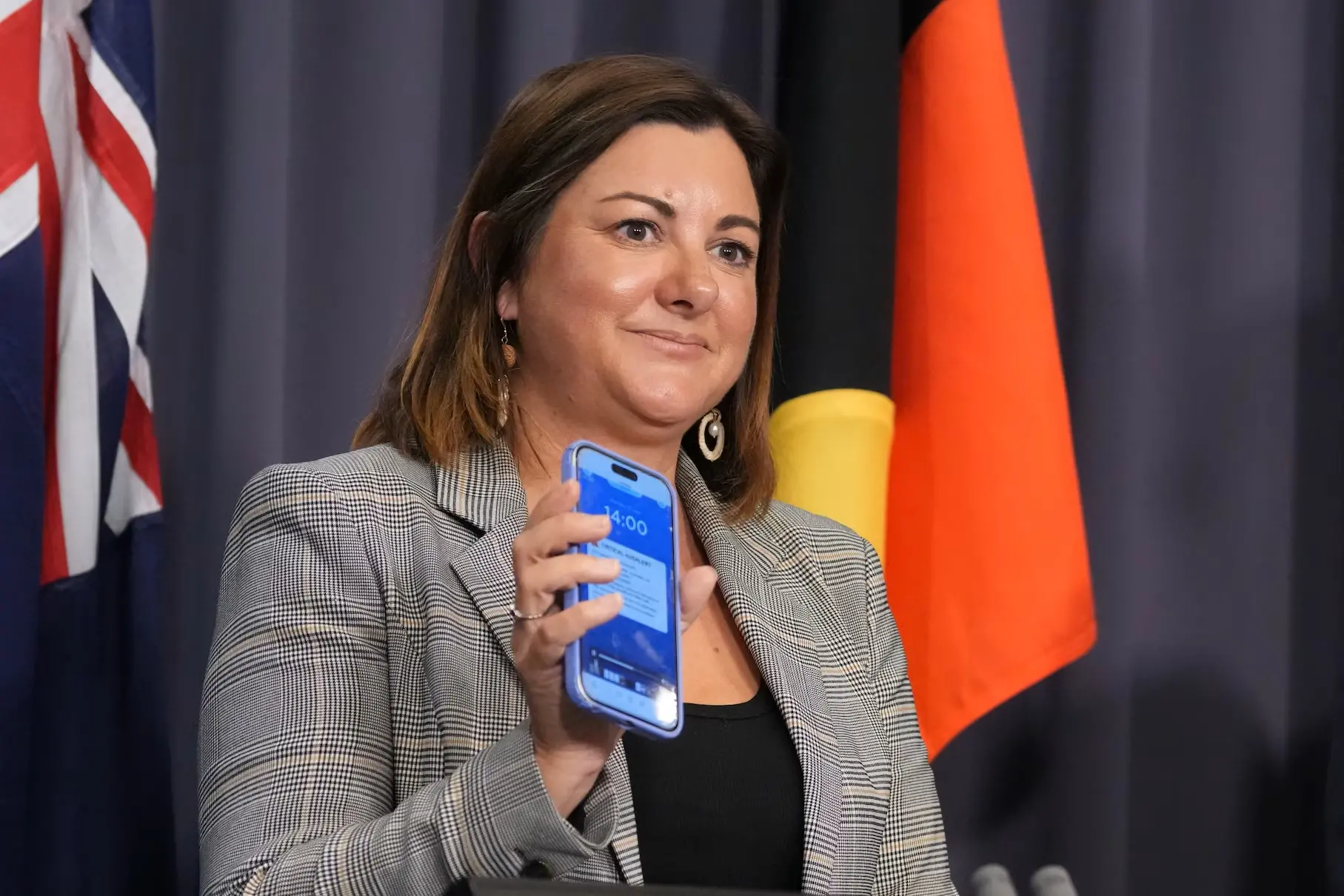
Kristy McBain, pictured with Prime Minister Anthony Albanese head of last year's election, says the AusAlert test will go ahead. (ABC News: ABC South East NSW: Floss Adams)
"Obviously, it would be great if we could use both systems to make sure that people are getting advice and notification if we need to advise people in those critical alert situations," she said.
"But that will be a decision for emergency service agencies who are in control of whatever that disaster may be at the time."
Ms McBain said the test would assess the system-wide performance of the technology.
"The national test also provides an opportunity for Australians to familiarise themselves with AusAlert before alerts are sent during local or national disasters," she said.
Western Australia and Queensland were understood to have raised concerns about whether the system would be able to contact landlines, which are still favoured in more remote areas.
And there are only plans to send messages in English, which may limit their effectiveness in certain parts of the country.
The alerts will appear as "system alerts" rather than text messages, which the federal government says will be faster, more reliable and precise because they use a dedicated channel directly from mobile towers in areas affected.
There are also questions about whether all older devices will be able to receive the messages.
All states and territories approached by the ABC, except the Australian Capital Territory, refused to say whether they would adopt the system at that time, or before the coming high-risk season.
The ACT confirmed it would transition to AusAlert on October 1, but that it would run alongside its existing emergency alert system.
State concerns
Western Australia's Department of Fire and Emergency Services said it was "assessing how AusAlert will operate alongside existing warning systems, processes and channels".
South Australian Emergency Services Minister Rhiannon Pearce said her state "continues to assess how AusAlert will operate alongside existing warning systems, processes and channels".
Tasmania's Minister for Police, Fire and Emergency Management Felix Ellis said AusAlert would be "an important part of Australia's emergency warning system", but there were "some concerns around its functionality".
A Victorian government spokesperson said AusAlerts would be a "powerful tool", but Victorians should not rely on any single source in an emergency.
A New South Wales government spokesperson said the state was "working closely with the Commonwealth" ahead of the rollout but also pointed to its existing services.
Supplied material courtesy of the Australian Broadcasting Corporation