PHOTO
73529.0
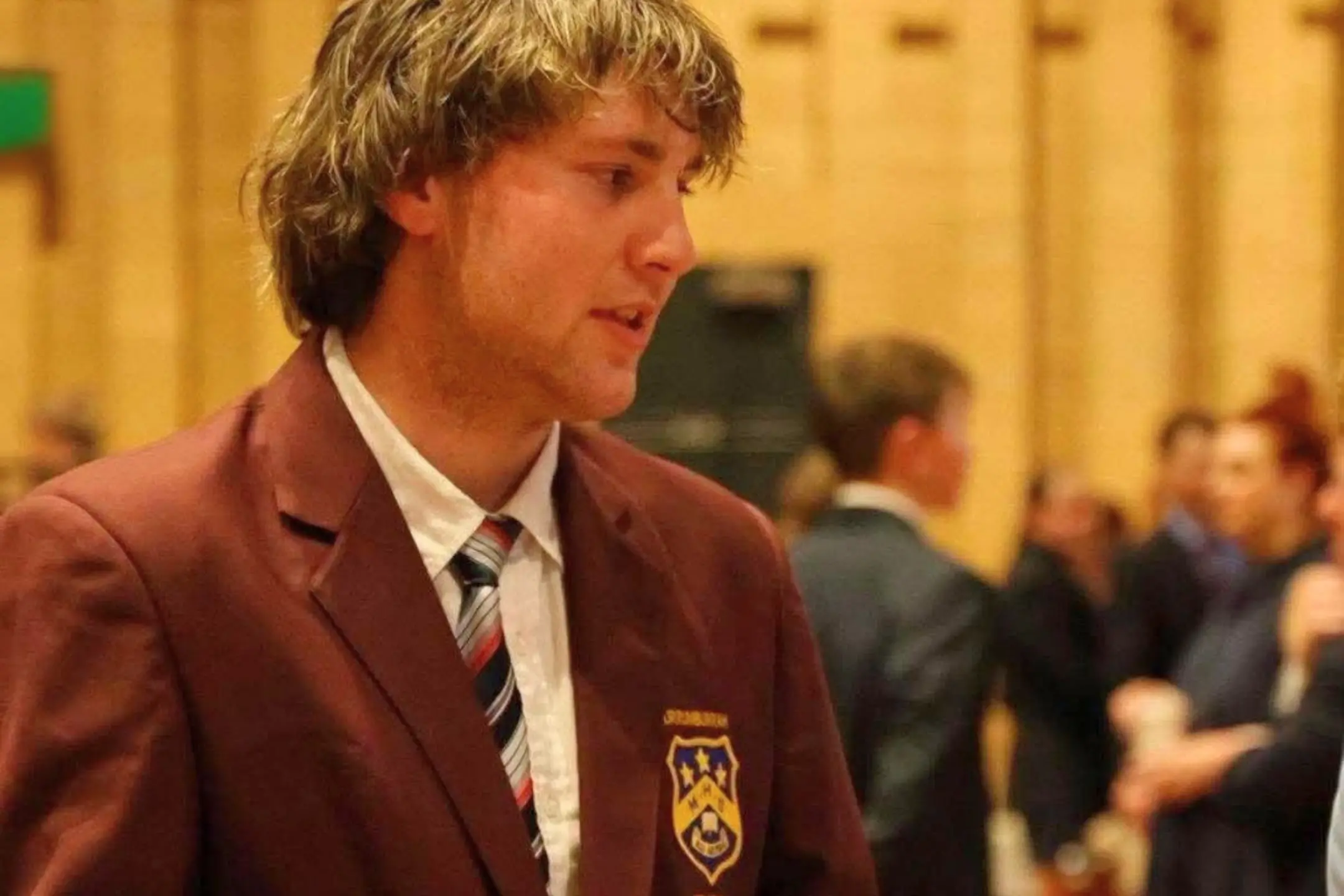
A year in Denmark gave Murrumburrah High School student Nicholas Young more than memories. It changed how he saw himself, what he believed communities deserved and the future he wanted to build.
“On a random train in Italy, that’s when I found out,” he said.
Nicholas Young was travelling with his family when an email arrived telling him he had been selected for a Rotary Youth Exchange.
His destination was Denmark.
The news was exciting, but for a teenager who describes himself as less outgoing and more nervous than he is today, it was also daunting.
“At first I got really nervous,” Nicholas said.
“I was like, ‘Don’t worry, it’s going to be too expensive. We don’t have to do it.’”
His family had other ideas.
“They kept pressing me, in a good way, to go,” he said.
“My sister-in-law said she’d disown me if I didn’t go.”
The family encouragement worked.
“It ended up being one of the best years of my life.”
The idea had first taken root years earlier, when Nicholas’s family hosted a German Rotary exchange student.
The experience showed him that another world existed beyond the familiar routines of school and home.
Before Denmark, Nicholas said he was quieter, more nervous and heavily invested in his schoolwork.
Having his mother teaching at Murrumburrah High School also meant there was little chance of disappearing into the background unnoticed.
“I had to be on my best behaviour,” he joked.


After almost 24 hours of travel, Nicholas arrived in Denmark to find all of his host families waiting to welcome him.
“We had a really big dinner right after I got off the plane,” he said.
The next day, after arriving during a snowstorm, he built a snowman for the first time.
Two days later, he started school.
His classmates were friendly, the snow was still novel and everything felt exciting.
But once the first rush of the experience faded, the scale of what he had agreed to began to settle in.
“You get what they call the honeymoon phase, and that’s the first few weeks,” Nicholas said.
“Then you sort of realise, ‘Oh wow, okay, I’m stuck here for a while.’"
“I had no way out until the end of the year.”
The hardest part was learning Danish.
Most people he met wanted to speak English and were eager to practise it with him, which made finding opportunities to speak their language surprisingly difficult.
“I often had to say, ‘Can I practise Danish with you, and maybe tomorrow we’ll do some English?’” he said.
Homesickness also arrived.
Nicholas missed his family, his animals and the ordinary responsibilities of home. But Denmark gave him room to move, both literally and emotionally.
Its extensive public transport network meant he could board a train, visit another town, walk through an unfamiliar city or meet friends whenever he needed to clear his head.
“You could just get on the train and go to a random city,” he said.
“I’d take a walk around or go meet some friends. It was very easy to get your mind off things you didn’t want to be thinking about.”


At first, Nicholas spent much of his time with other young people on exchange.
They understood one another’s experiences, but they could also amplify each other’s loneliness.
“The exchange students made you feel homesick sometimes because they were also homesick,” he said.
“It’s like a sickness that spreads.”
The turning point came when he began spending more time with Danish students.
Making local friends required him to step outside his comfort zone, start conversations and risk awkwardness.
It was also the moment Denmark began to feel less like somewhere he had been sent and more like somewhere he belonged.
“Once I started making Danish friends, it became so much easier,” he said.
“I loved it there. I didn’t want to leave.”
“You’re sort of forced to put yourself out there and talk to people,” he said.
When he returned home, his family noticed the obvious changes first.
He was taller. His clothes were different after adopting the baggy jeans popular among Danish teenagers.
Even the rhythm of his speech had changed.
Nicholas had learned to slow down because people in Denmark sometimes struggled with his Australian accent.
The deeper difference was less visible.
“I was just more willing to do things,” he said.
That willingness opened another door.
After hearing about the ACT Youth Parliament from an English teacher who encouraged students to pursue opportunities, Nicholas submitted an application.
He was selected for the program, where young people research issues, help draft proposed legislation, debate ideas and speak directly with political representatives.
Nicholas believes his year overseas helped him take that next step.
“I think it did, in terms of my willingness to do things and my enthusiasm,” he said.
At Youth Parliament, he learned how difficult it was to turn an idea into a clear and workable bill.
The wording had to be concise, understandable and structured in a way that could withstand debate.
He also met representatives from across the political spectrum and had the chance to ask them questions face-to-face.
Nicholas was unable to attend the program’s final sessions and presentation because of his school studies, but said the experience had shown him how young people could participate in political discussions.
“It gives young people a chance to speak up,” he said.
“A lot of younger generations don’t feel like they’ve got a voice in our current political landscape.
“It really helps to actually get heard by the politicians.”
The issue Nicholas chose to raise was public transport.
His interest was born in Denmark, where buses and trains were clean, affordable, reliable and available even in tiny communities.
“You could have a town with a population of 10 and they’d still have a bus every hour,” he said.
“There was not a single town that wasn’t served by public transport.”
For students, travel within their region was highly affordable, and a person living in a small town could reach Denmark’s second-largest city by train in less than half an hour.
Back home, the contrast was impossible to ignore.
Nicholas said even basic travel generally depended on access to a car.
“There’s no public transport — not even a bus,” he said.
What he had seen overseas did more than make travel easier.
It changed his understanding of what could be achieved, particularly for people living outside major cities.
Denmark showed him that where a person lived did not have to determine whether they could reach school, work, services or opportunity.
That experience is now shaping his plans for the future.
Nicholas hopes to study law combined with arts or business and ultimately work as a policy adviser, ideally in transport.
“I like the investigative side of it — researching things,” he said.
“My goal is to become a policy adviser in Canberra and try to work in transport.”
The once-nervous student who wondered whether going to Denmark would be too difficult is now considering how he might help shape the systems people rely on every day.
Nicholas hopes his story will encourage other local young people to embrace opportunities, even when they feel uncertain or out of reach.
His advice to those facing an opportunity that feels too large, unfamiliar or frightening is uncomplicated.
“Just do it and don’t look back,” Nicholas said.
“If you have doubts, ask people for support and see what they think, but keep going forward.
“It might be the best thing that’s ever happened to you.”
Then he put the lesson of the past few years into a single sentence.
“Just keep opening those doors,” he said.
“You never know where they’ll lead.”