
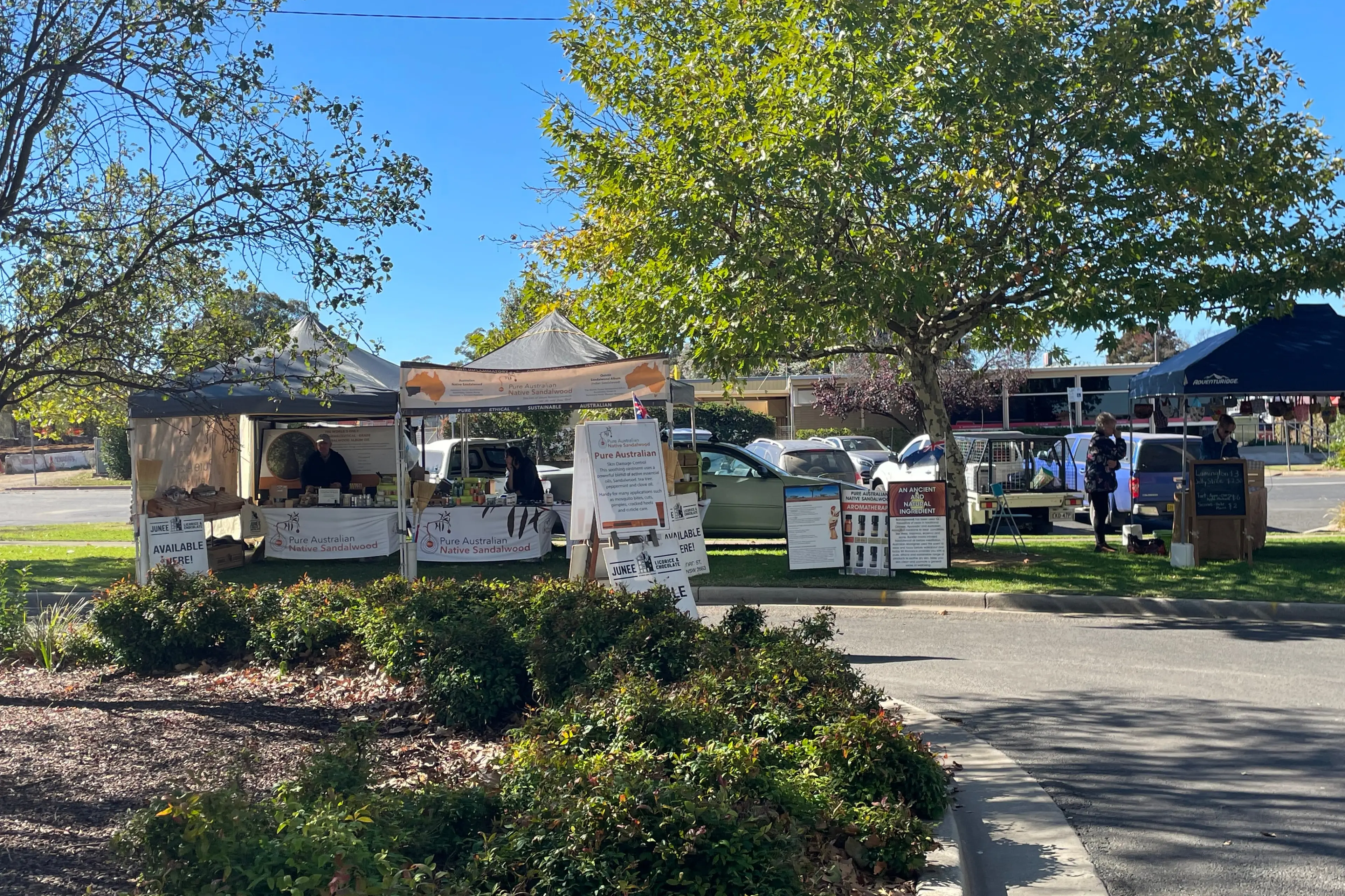
PHOTO
65852.0
Local markets have long been part of the fabric of life across the Hilltops — a place to pick up fresh produce, support small businesses, and catch up with familiar faces.
But behind the stalls and friendly conversations, many organisers and stallholders are quietly working harder than ever to keep them going.
To better understand what’s happening, we spoke with organisers from a couple of the region’s larger local markets.
Across small regional towns, markets are not always thriving in the way people might expect.
Attendance can vary, stallholder numbers can fluctuate, and the cost of simply turning up — for both organisers and vendors — continues to rise.
For stallholders travelling between towns, often with trailers, equipment and stock, the cost of getting to a market can quickly eat into what they earn on the day.
In smaller communities, where distances are greater and populations are spread out, even a small drop in participation can change the overall feel of a market.
Young Regional Farmers Market President, Helen Sell said the challenge is real, even for well-established markets.
“It’s becoming harder for stallholders to justify the travel and setup costs, especially when you can’t guarantee a strong turnout every time,” she said. “We’re all feeling that pressure — organisers and stallholders alike.”
It’s a delicate balance. Fewer stalls can mean fewer visitors, and fewer visitors can make it harder to attract stalls — a cycle that many regional markets are now trying to manage.
The value of local markets to the community goes far beyond what’s bought and sold.
Local markets are one of the few remaining spaces where community connection happens naturally — where people can gather without needing a booking, a membership or a large budget.
Across the region, local market organisers all say that it's the connection that is a major part of what makes markets so important in regional towns.
With one organiser saying they are a low-cost way for people to come together, spend time as a community, and feel connected to each other — not only for the community but for the stallholders as well.
Husband and wife team, Justin McNamara and Jenny Adams said on Saturday at the Young Regional Farmers Market that getting out around people and making new connections was a big part of why they purchased their mobile coffee business, Urban Foxx Coffee.
"In small towns, where isolation can become a real thing, that kind of regular space to connect is incredibly important to all of us,” said Jenny.
There are also clear lessons being shared about what helps markets succeed.
Boorowa Rotary Club's Lyn Diskon said a successful market is about more than just what’s for sale — it’s about creating an experience people want to return to.
“A lot comes down to creating a real sense of atmosphere that people want to be part of,” she said. “It’s things like having music or a busker, space for people to sit and eat, and somewhere for kids to run around — making it a place people can spend time, not just pass through.
"Location and signage matter too, Ms Diskon said. Being somewhere visible where people naturally stop, like near pubs or cafés, and close to facilities like public toilets and having clear signage, flags, and making sure you’re visible to people travelling by. You don’t want to be hidden away", she said.
Another important factor is consistency — if you create a great atmosphere at one market, people expect that same experience next time. It needs to feel reliable so people know it’s worth coming back.” Ms Diskon added.
That combination — atmosphere, visibility and consistency — is often what turns a quiet market into one that people build into their routine.
Ultimately, the future of local markets does not rest solely with organisers alone.
It also sits with our community.
Supporting a market doesn’t require a big commitment — but it does rely on enough people choosing to show up. Grabbing a coffee, buying a few items, bringing a friend, or sharing a social media post online can all make a difference. Regular attendance helps create the confidence stallholders need to keep coming back.
In small regional towns, where everything is more spread out and more personal, that support matters even more.
Local markets are not just about what’s for sale — they are about what holds a community together.
And while the pressures are real, so is the opportunity.
With enough people choosing to support them, local markets can continue to evolve, adapt, and remain a vital part of life across the Hilltops — not just as places to shop, but as places to connect, support one another, and keep the spirit of coming together as a community alive and well.