Two well-known Young agribusinesses will share in $3 million in NSW Government funding as part of a major investment in regional agriculture innovation, advanced manufacturing and sustainability.

Freeman Vineyards has secured $2 million to build what the NSW Government says will be the state’s first dealcoholisation facility, enabling end-to-end production of non-alcoholic wine in regional NSW.

Blantyre Farms has secured $1 million to install a bespoke on-farm feedmill, allowing the business to produce high-quality pig feed using food waste and by-products.

The Young projects are among five Southern NSW initiatives funded through the NSW Government’s Agriculture Industries Innovation and Growth Program, which is backing 14 projects across the state.

Member for Cootamundra Steph Cooke MP has welcomed a $2 million NSW Government investment for Freeman Vineyards in Young to establish the state’s first dealcoholisation facility.

The facility will position the Hilltops region as a national leader in the rapidly growing non-alcoholic wine market.

“This is a landmark investment for Freeman Vineyard and the Hilltops wine region, cementing our reputation as a centre for agricultural innovation and premium food and wine production,” Ms Cooke said.

“Freeman Vineyards has built an outstanding reputation for producing worldclass wines and this funding will allow them to lead the way in one of the fastest growing segments of the global wine industry.”

Ms Cooke said the funding is a vote of confidence in the Hilltops region’s wine industry and would create new opportunities for local producers, growers and the wider regional economy.

“Establishing New South Wales’s first dealcoholisation facility right here in Young means more value will be added locally, more jobs can be created locally, and more opportunities will flow to our grape growers and winemakers,” Ms Cooke said.

“Until now, producers have had to send their wine interstate for alcohol removal.

“Keeping that capability in regional NSW will reduce transport costs, improve efficiency and strengthen our local manufacturing sector.”

Demand for premium low and no-alcohol wines continues to grow both domestically and internationally, making the project a significant investment into the future of the NSW wine industry.

“Consumer preferences are evolving and our local producers are evolving with them,” Ms Cooke said.

“This funding will deliver long-term benefits not only for Young, but for wineries across the state looking to access this technology closer to home.

RDASNA Chief Executive Officer Olivia West said the successful projects reflected the kind of forward-thinking investment needed across regional industries.

“Regional communities have always been innovators,” Ms West said.

“These projects demonstrate that when businesses are prepared to invest and governments back good ideas, regional NSW can lead the nation in agricultural innovation, advanced manufacturing and sustainable production.

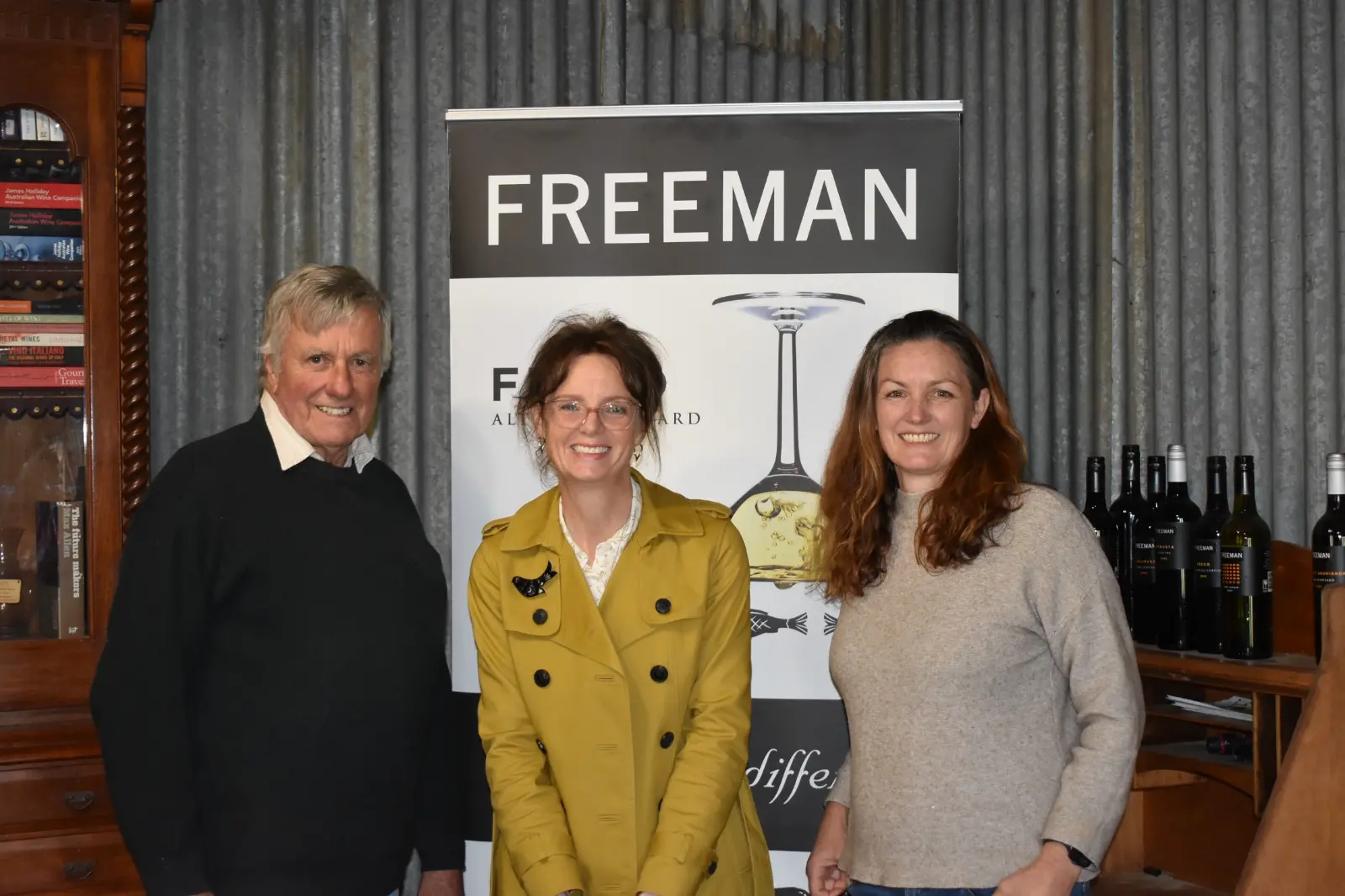
Freeman Vineyards was one of nine recipients of funding through the Agriculture Industries Innovation and Growth Program, with owner and founder Dr Brian Freeman and his daughter Marcelle Freeman saying the project will be a game changer for the industry in NSW.

“We are really excited. You can make much better-quality wine if you don’t have to transport it far, so we can make much better-quality non-alcoholic wine if we don’t have to transport it far,” Ms Marcelle said.

“We’re also putting in a bottling unit, so that can help local producers as well, if they want.”

Ms Freeman said the new facility is expected to create local employment opportunities once operational.

“We will definitely need to hire more people locally once the facility is up and running,” Ms Freeman said.

“We’re going to need wine makers, people to work in the winery and if we’ve got a bottling unit we’ll need people to work there as well.”

The dealcoholisation project and bottling unit will mean producers from across the state can have their wine made, dealcholised and bottled all in one place, supporting high-quality products without the cost and complexity of being interstate transport.

“It’s going to be another market that’s going to allow us to maintain more of our vineyards, and it’s also going to, in the future, allow for expansion,” Dr Freeman said.

Dr Freeman said the facility would help meet growing demand as more consumers, particularly younger people, move towards low and no alcohol options.

“It’s said to be the young generation abstaining from alcohol totally, so there’s that aspect coming into it, as well as the older generation are drinking a lot less,” Dr Freeman said.

“But it’s the Hilltops region that has a big advantage, and we’re producing really top-quality grapes, so we can produce a very good quality product on our range of wines that we currently have, but we’ll be able to produce a really good non-alcoholic wine as well.”

“These investments don’t just benefit individual businesses — they strengthen regional supply chains, create highly skilled jobs, encourage further private investment and help ensure more value is added within our region,” RDASNA Chief Executive Officer Olivia West said.

For Young, the funding places two established local businesses at the centre of a broader push to support regional processing, value-adding and sustainable production.

Freeman Vineyards’ project is expected to support the growing non-alcoholic wine market by allowing alcohol to be removed from wine within regional NSW, rather than requiring product to be transported elsewhere for processing.